
(advertisement)
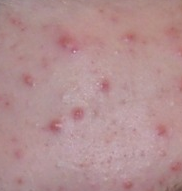
 Acne is a skin problem very common with teenagers, it can also affect some people during their adult life as well, most commonly women. On average acne can last for up to eight years if left untreated. It affects mainly the face, sometimes the back, shoulders and chest, causing different types of spots.
In general girls tend to develop acne at early teens, boys tend to start much later and by their early twenties the acne has settled in most people.
Causes Of Acne
Acne can be caused by several factors, namely hormonal imbalances (puberty and menstruation), genetics, stress, infections (specifically Propionibacterium acnes) and poor diet – high GI diets and lactose both tend to worsen the condition.
The hormonal changes that take place around puberty can affect the skin causing acne. These changes are thought to be caused by the male hormone androgens. Also, many women suffer worse acne at stages throughout the menstrual cycle.
(advertisement)
Acne can appear when the sebaceous glands increase the production of sebum or grease. Acne will show when there is a combination of the blockage of the skin pores due to the increased quantity of sebum and accumulation of unshed cells on the skin surface. Increased numbers of bacteria in the blocked pores and on the skin surface can also increase the risk of acne forming.
Types of Spots:
Blackheads or comedones – caused by the build up of dead skin cells, bacteria and grease blocking the pores. The dark colour of blackheads is caused by melanin (skin pigment) accumulation in the pores.
Whiteheads – These are skin coloured and can become inflamed and infected, changing into papules, pustules or cysts. The skin can turn red, inflamed and greasy because the material inside the pores cannot escape.
Red spots or papules – these are inflamed whiteheads, if it develops a head it is called pustules. The spot can be large or small depending on the extension of the inflammation the skin can become tender, lasting between 3 to 10 days, stubborn cysts can last for few months. Pustules can cysts sometimes can scar the skin in some people.
Some skin conditions can be mistaken for acne, such as acne rosacea, common in older people, affecting mainly the nose and cheeks, with lots of papules and pustules, but there are no blackheads. The skin tends react to heat, emotion, drinking alcohol or eating spicy food, becoming flushed and turning red.
Isolated spots can be common from time to time and can be mistaken for acne during teenage hood. Spots can also be related to some other infections, like impetigo or viruses, like shingles or chickenpox.
(advertisement)
Managing Acne
If you suffer from acne there are several lifestyle factors that you can adopt to reduce the impact of the condition;
- Wash your skin at least twice daily, morning and evening, to unblock the pores and help prevent spots.
- Use an antiseptic or antibacterial cleanser or lotion to on the skin to remove grease and kill the bacteria on the skin.
- Apply topical treatments to kill bacteria, calm the skin and unblock pores.
- Don’t pick, squeeze or pop inflamed spots as it can actually worsen the condition by infecting the surrounding skin, it can also leave a permanent scar on the skin.
- Eat a healthy balanced diet with plenty of fruit and vegetables.
Types of Treatment for Acne
For a mild acne condition the skin can be treated with topical creams, gel or liquid applied directly to the skin, more severe acne can be treated with oral tables.
Benzoyl peroxide is an example of topical cream used to treat acne, it works by peeling off the dead skin cells on the top layer of the skin, shedding blackheads and unblocking pores. It is also an effective antibacterial helping to stop spots from getting inflamed or infected.
Other topical treatments include salicylic acid, resorcinol and sulphur, these are abrasives, which also help to shed the top layer of the skin, and open blocked pores, products containing triclosan works by reducing the amount of bacteria on the skin’s surface.
Moderate acne can be treated with oral antibiotic tablets, as well as topical solutions. Female patients can be treated with hormonal treatment, using contraceptive pill, such as Dianette, helping to reduce the amount of grease produced by sebaceous gland in the skin.
Severe cases of acne can be treated effectively with oral tablets containing isotretinoin, derivative of vitamin A, such as Roaccutane or Accutane. There are also topic solutions, such as Isotrex or Isotrexin which also contain isotretinoin. Read more about acne treatment with Roaccunate below.
Most treatments for acne need to the followed on for several months before an improvement is noticed. If the treatment is working some improvement can be expected after a couple of months, further improvement can be expected after that. It may take between four to eight months before a treatment is completed.
Acne can cause discomfort, anxiety and embarrassment, in some cases it can lead to depression, even if it is not severe, sometimes preventing people from going out and enjoy a normal social life. See your doctor at the first site of acne for an effective treatment and to prevent permanent scarring of the skin.
Roaccutane Treatment
Roaccutane can be prescribed by your skin specialist doctor to treat severe cases of acne that have not responded successfully to other treatments. Roaccutane is a retinoid compound that contains a substance called isotretinoin, which is chemically related to vitamin A.
How does Roaccutane work?
Roaccutane works by reducing the amount of sebum and grease produced by the sebaceous glands in the skin. It also reduces the number of bacteria on the skin surface, reducing inflammation and opening blocked pores.
How long will the treatment last?
The treatment with Roaccutane can last between four to eight months. During the first few weeks of treatment your acne can get worse before it gets better. However this is an indication that the treatment is working. After the initial period you should see a significant improvement of the skin, in most patients the skin continuous to improve even after the treatment has finished. However, Roaccutane can not improve scaring caused by acne, but it can help to prevent new scarring from occurring.
When you must not take Roaccutane?
• You must not take Roaccutane if you are pregnant, breastfeeding or at least one month before you fall pregnant, however your doctor can advise you to play safe and wait at least six months after treatment is finished before you fall pregnant, due to the high risk of having a severally deformed baby. Female patients should wait until the 2nd or 3rd day of the next normal menstrual period before starting taking Roaccutane.
- You must not take Roaccutane if you have had an allergic reaction to Roaccutane, vitamin A or other retinoids medicines.
- You must not take Roaccutane if you are taking tetracycline antibiotics.
- You must not take Roaccutane if you have severe liver disease.
- You must not take Roaccutane if you have very high levels of cholesterol or triglycerides in your blood.
- You must not take Roaccutane if you have hypervitaminosis A, which is a condition caused by an excessive amount of vitamin A in the diet.
Things to be aware of while taking Roaccutane:
- Your doctor may ask you to have regular blood tests to monitor your liver function, blood sugar levels and blood cholesterol levels.
- You should not drink alcohol, at all, while taking Roaccutane, due to the increased risk of liver damage.
- Tell your doctor if you intend to do lots of heavy lifting or exercise, as your muscles and joints may get tender or stiff with heavy exercise.
- You should not donate blood during the course of treatment or at least one month after the treatment has finished.
- You should be cautions when driving or operating machinery after starting treatment, until you know how you react to Roaccutane. It does not normally affect your ability to drive or operate machinery. However altered night vision and other visual disturbances may occur when taking Roaccutane.
- It may be uncomfortable to wear contact lenses during treatment with Roaccutane as it can cause dry eyes. You may need to use eye lubricant to alleviate the discomfort or wear glasses instead.
- Avoid excessive sun exposure and use sun cream while taking Roaccutane as your skin can be more sensitive and prone to sunburn.
- Avoid waxing and dermabrasion during treatment with Roaccutane and for 5 to 6 months after the treatment has finished, as the skin may be more sensitive to dermatitis and scaring.
- Avoid facial peels, electrolysis and some hair treatments, as the skin may be more delicate during and for a while after treatment.
What are the possible side effects of Roaccutane?
Some of the following unwanted side effects may occur in some people taking Roaccutane. All medicines can have side effect, sometimes they are serious, most of the time they are not. Medical treatment may be needed if you get some of the side effects. This is a list of most possible side effects, it does not mean you will experience them during treatment.
- Dry lips, mouth, nose and skin – Chapstick Medicated lip balm can be used to soften the skin of the nose and lips
- Fragile skin
- Change in colour of the skin
- Peeling palms of the hands and soles of the feet
- Itchy skin rash
- An increased susceptibility to sunburn
- Sweating
- Changes to the nails
- Eye problems such as dry, sore, swollen or itchy eyes, discharge or trouble seeing at night
- Nosebleeds
- Tenderness or stiffness in your bones, joints or muscles
- Tiredness
- Headache
- Hair loss (sometimes occurs and is usually temporary but in rare cases, has persisted)
- Excessive hairiness
- Hoarseness
These side effects are usually mild and related to the dose taken. Most of them disappear completely after the dose is lowered or stopped.
Other more serious side effects include:
- Nausea
- Vomiting
- Persistent headache
- Blurred vision or visual disturbances
- Severe upper stomach pain
- Blood in stools or severe diarrhoea
- Severe skin rash or severe bruising
- Liver damage
- Skeletal hyperostosis – excessive bone growth that occurs along the sides of the spine.
- Psychosis: thinking, seeing or hearing things that are not real
- Feeling depressed, with or without suicidal thoughts
Symptoms of depression may include:
- Feeling sad or having crying spells
- Losing interest in activities you once enjoyed
- Sleeping too much or having trouble sleeping
- Changes in your appetite or body weight
- Having trouble concentrating
- Withdrawing from your friends or family
- Feeling like you have no energy
- Feelings of worthlessness or inappropriate guilt
These may be serious side effects. You may need urgent medical attention. Serious side effects are rare.
Ingredients of Roaccutane:
Active ingredient – isotretinoin
- Each 10 mg capsule contains 10 mg isotretinoin
- Each 20 mg capsule contains 20 mg isotretinoin
Inactive ingredients –
The capsules also contain:
- Soya oil
- Yellow beeswax
- Partially hydrogenated soya oil
- Hydrogenated soya oil
Soya oil may contain traces of arachidic acid (a component of peanut oil).
The capsule shell contains:
- Gelatin
- Glycerol
- Orbital
- Mannitol
- Maize starch product
- Titanium dioxide
- Iron oxide, red
The printing ink contains:
- Shellac
- Iron oxide, black
ROACCUTANE does not contain sucrose or gluten.
Further Reading and Advice
- NHS Choices information on Acne
- Acne Leaflet – British Association of Dermatologists
- Acne:
- Medicine Plus information on Acne
- Kidshealth guide to Acne – includes audio
- American Academy of Dermatology – Ance
- Acne Medication May Raise Risk of Eye Infections – HealthFinder.gov
- Depression and suicidal behavior in acne patients treated with isotretinoin: a systematic review – PubMed 2005
(advertisement)
while taking roaccutane…can i go for a monthly facial treatment because i have a lot of black and white head. i am so stress..it doesn’t dissapear. this is my 4th month of 10mg roaccutane.
You should check with your doctor before you start any other type of skin treatment while on Roaccutane, because the skin is very sensitive at this stage. I know it is difficult but try to be patient and wait until the skin has recovered from Roaccutane treatment before you start any other treatment.
Hi, I finished my treatment of Roaccutane 6 weeks ago and i was on it for around four months. I was wondering how long before the side effects of Roaccutane such as dry skin, getting sun burnt easily, reddish skin tone etc. will stop.
Thanks!
Your body should start to recovery soon, give it a little longer. Moisturize, especially your lips and very dry areas.
hi!when i started taking roaccutane my pimples got worst..and its my 4th week already taking it…i’m so worried because my work is affected already..i’m working in a hotel…in a spa..so my dermatologist suggested that i will undergo incision and flushing out the PUS…is it the right thing to do? bec as far as i know squeezing the pimples is not good if you are taking roaccutane???
thanks!
It may be worthwhile getting a second opinion before flushing out the pus.
Hi, i am due to see my dermatologist next week to begin my course of roaccutaine treatment but i am currently taking a course of tetracycline antibiotics for my acne, i will have been taking tetracycline for 14 weeks by the time i see the dermatologist and i was wondering if i need to stop taking the tetracycline antibiotics before i start the roaccutaine treatment & if so when do i need to stop the antibiotics as the dermatologist didnt say anything when i told him that im currently on tetracycline antibiotics.
Hi Mikela, I suggest that you call your dermatologist and ask.